AC Not Cooling? Start Here
Check three things before you call anyone. First, the thermostat: set to COOL, fan set to AUTO (not ON), and the set temperature below the room temperature. Second, the breakers for both the indoor air handler and the outdoor condenser: a tripped breaker is a two-second fix. Third, the air filter: a filter clogged solid chokes airflow and can ice up the coil. If all three check out and the unit still blows warm, hums without starting, or keeps icing up, you likely have a capacitor, contactor, or refrigerant issue that needs a technician.
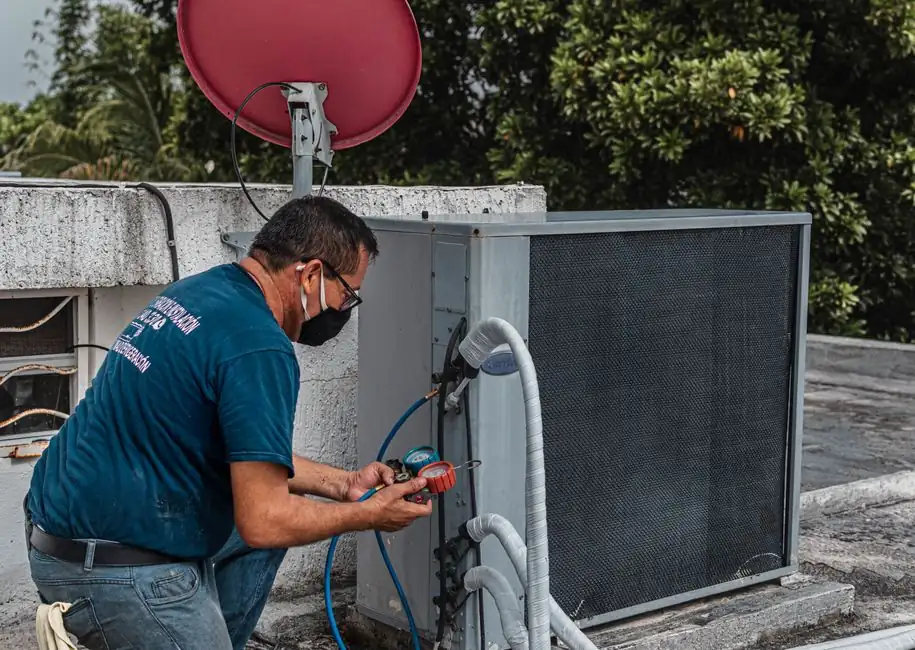
The Two Parts We Replace Most: Capacitors and Contactors
If we had to bet on a no-cool call before opening the panel, we would bet on these two. The capacitor gives the compressor and fan motors their starting kick; when it dies, you hear a hum but nothing starts, or the unit starts weakly and trips out. The contactor is the heavy-duty switch that powers the condenser; pitted contacts cause intermittent cooling or a unit that will not start at all. Both are inexpensive parts and quick replacements, which is why most of these calls land in our typical $100-$300 range.
Signs of a Refrigerant Leak
- Ice on the refrigerant lines or indoor coil, even on a hot day.
- A hissing or bubbling sound near the lines or coil.
- Long run cycles with weak cooling: the system runs constantly but never quite gets there.
- Higher electric bills with no change in thermostat habits.
Here is our policy, and it should be everyone's: we find the leak before adding refrigerant. Topping off a leaking system without repairing it is money out the window and hard on the compressor. We locate the leak, quote the real fix, and only then recharge the system.
Is It Electrical or Mechanical?
This is the first fork in every diagnosis, and it decides everything that follows. Breaker tripping repeatedly, burning smells, or a unit that is completely dead point to the electrical side: breakers, wiring, contactors, capacitors, control boards. A unit that runs but cools poorly, makes new noises, or ices up points to the mechanical and refrigerant side: airflow, coils, blower, charge level. We test in order from simplest to hardest, so you pay for the actual failed part, not a pile of guesses. And if the air is cool but the house still feels clammy, that is a humidity problem more than a temperature problem: our dehumidifier repair notes cover that side.
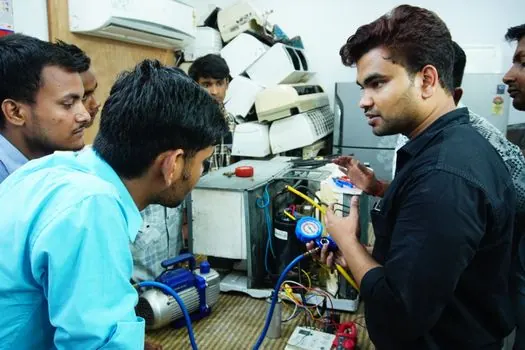
What You Can Safely Check (and When to Call a Pro)
We are happy to save you a service call when the fix is simple. Safe DIY checks: replace a dirty filter, confirm thermostat settings, reset a tripped breaker once, and clear leaves and debris from around the outdoor condenser (give it two feet of breathing room). Hose off the condenser fins gently from the inside out if they are caked with cottonwood fluff.
Call a pro for: anything involving refrigerant (it is regulated, and guessing the charge ruins compressors), capacitors (they store a charge that can shock you even with power off), repeated breaker trips (a symptom of something serious), and any burning smell. If you are unsure which side of the line you are on, call our homepage number and ask. We would rather talk you through a filter change than charge you for one.
The Energy Saver air conditioning guidance from the U.S. Department of Energy is a good reference for what normal maintenance looks like.
What Happens on an AC Repair Visit
- We listen first. When did it stop cooling? Any new noises, smells, or ice? The history points us in the right direction before we open a panel.
- We check the simple stuff. Thermostat, filter, breakers, airflow. A surprising number of calls end here.
- We test electrically. Capacitor readings, contactor condition, voltage at the motors. Numbers, not guesses.
- We check the refrigerant side. Pressures, temperatures, and a leak check if the charge is low.
- Firm price before work. You approve the exact number, we make the repair, and we verify cold air at the vents before we leave.
We run no-cool calls all over town, including Brixworth and Wades Grove. If your thermostat is part of the mystery, our thermostat repair notes cover the settings and wiring issues we see most.
AC Blowing Warm? Do Not Sweat It.
Most repairs between $100 and $300 for most common fixes. Free estimates and upfront pricing before any work starts.
What to Expect When You Book
No fine print, no surprises. Here is exactly how a service call with us goes.
- Call (931) 208-9792. Tell us what is happening in one sentence. We will ask two or three quick questions so the tech shows up with the right parts.
- Get a visit, typically same-day or next-day. We serve all of Spring Hill, on both the Maury County and Williamson County sides.
- Free estimate, firm price first. We diagnose the problem and give you an upfront price before any work starts. You approve it or you do not. Most repairs land between $100 and $300.
- We fix it and test it. We run the appliance through a full cycle before we leave, and we clean up after ourselves.
Our hours are Mon-Fri 7AM-7PM, Sat 8AM-4PM, Sun closed. If you are not sure whether it is worth fixing, read our repair vs replace guide or just call and ask. We would rather give you a straight answer than sell you a repair you do not need.
Frequently Asked Questions
Why is my AC running but not cooling the house?
The most common causes are a thermostat set wrong (check COOL and AUTO first), a clogged filter choking airflow, low refrigerant from a leak, or a failing capacitor that will not start the compressor properly. If the quick checks do not fix it, it needs gauges and meters, which means a tech.
How do I know if my AC capacitor is bad?
Classic signs: a humming sound from the outdoor unit with no fan or compressor starting, the system struggling to start, or intermittent cooling that comes and goes. A swollen or bulging top on the capacitor is a visual giveaway. Capacitors are inexpensive parts and one of our most common fixes.
Can you just add refrigerant to my AC?
Only after we find and fix the leak. Refrigerant does not get used up; a low charge means it escaped somewhere. Topping off without repairing the leak means paying for refrigerant twice and running the compressor starved of oil and coolant in between. We leak-check first, quote the real repair, then recharge.
Why does my AC keep tripping the breaker?
Repeated trips mean something is drawing too much current or shorting: a failing compressor, a shorted wire, a seized fan motor, or occasionally a weak breaker. Do not keep resetting it; that is how small electrical problems become big ones. This one needs a technician with a meter.
How fast can you get to Brixworth on a 95-degree day?
We schedule AC calls as priority in hot weather, typically same-day or next-day. Calling early in the day helps: the schedule fills fast when the whole town's AC is struggling. We serve Brixworth, Wades Grove, and all of Spring Hill.
Related Services
Refrigerator Repair
Fridge not cooling? We diagnose and fix cooling issues fast.
Dehumidifier Repair
Musty basement or crawlspace? Dehumidifier diagnosis and repair.
Thermostat Repair
Blank screen or wrong temps? Thermostat and wiring repair.
We Service All Major Appliance Brands
We repair appliances from all the major manufacturers, including GE, Samsung, Whirlpool, LG, KitchenAid, Frigidaire, Kenmore, Maytag, Bosch, Amana, Electrolux, Hotpoint, and Roper. See all brands we service.
Get in Touch with Quick Air Fix
Call or text is the fastest way to reach us. Tell us what is going on and we will get you scheduled.
Quick Air Fix
-
Phone
(931) 208-9792 -
Address
5075 Main St, Spring Hill, TN 37174
-
Hours
Mon-Fri: 7AM - 7PM
Sat: 8AM - 4PM
Sun: Closed